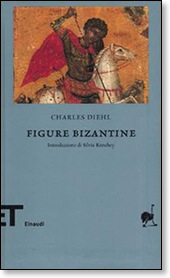
Ronchey, S. Introduction. “Charles Diehl, o del bizantinismo.” C. Diehl. Figure byzantine. Italian ed. Turin: Einaudi, 2007. vii-xiv.
Charles Diehl was a pioneer in the field of Byzantine studies, which originated in France at the time of Napoleon III when the Balkan crisis reignited interest on the part of European readers in an area that had been neglected since the fall of Constantinople. Already stimulated by the rise of colonialism and increased travel to the Orient in the second half of the century, exoticism in artistic and literary taste produced in the 1880s and 90s a gradual reawakening of curiosity about Byzantium. In this context, we can place Victorien Sardou’s Théodora, which a hostile Diehl attended, as a young student, at its Paris opening in 1884.
The terms of the polemic which twenty years later would place him, a recognised Byzantine scholar, in conflict with the now elderly playwright, would shape definitively the stereotyped image of the Byzantine court as the exclusive realm of feminine or effeminate, and thus idle and vacuous intrigue. The distorted opinion of Byzantium in the twentieth century owes its origins to this image. The derogatory meaning we associate today with the adjective “byzantine” and the irrational perception of Byzantine history as one of “indefinitely protracted decline” are rooted in this war between bourgeois sensibilities: in the encounter and clash between the decadent sensiblerie of ‘letterati’ and the pruderie of scholars.
With his Figures byzantines Diehl laid the foundations of Byzantine studies in the name of Byzantinism — in the sense that it is impossible for any historian to escape his or her time. What one of his heroines Anna Comnena called “the river of centuries” overwhelms all interpretations of history and washes them back to the ages they belong to and, in doing so, restores a new reflection to us each time. History reveals itself gradually, by reflecting itself little by little in the history of the epochs following as they elaborate it. And this is how History selects (in a Darwinian sense) its characters and events. There are few deposits of 19th century historiography that still shine in the light of the 21st century. Diehl’s Figures are among these.
Versione PDF
Keywords
- Charles Diehl
- Figures byzantines
- Theodora
- Théodora
- Victorien Sardou
- Sarah Bernhardt